Our Team

The people behind Atomic Goats

Decades of combined experience in AI, computer vision, data architecture, and scaling tech startups.

Thomas Rowlingson-Turner

Thomas Rowlingson-Turner

Founder & CEOLinkedIn

Plymouth University graduate with a strong analytical foundation and over five years of experience applying structured problem-solving to technology products. Thomas founded Atomic Goats after identifying a fundamental gap in how online fashion handles outfit visualisation, most tools only work at the item level, leaving shoppers unable to see how pieces come together.

His vision centres on using generative AI to give every shopper, creator, and brand the ability to see complete outfits on real bodies, eliminating guesswork and reducing returns. Thomas drives product strategy, go-to-market, and the company’s focus on making AI-powered try-on simple enough for any Shopify store to adopt.


Stephen Upton

Stephen Upton

Business Development & GrowthLinkedIn

A naturally commercial and dynamic leader with deep expertise in helping technology companies scale. Loughborough University graduate with a career spanning innovation advisory, business development, and growth strategy for SMEs and startups.

Stephen has worked with over a thousand businesses on growth strategy, investment readiness, and market development, including programmes partnered with Innovate UK. He combines sharp commercial instincts with a collaborative, people-centric style, building the relationships and partnerships that turn early traction into sustainable revenue.

At Atomic Goats, Stephen leads commercial strategy and partnerships, connecting the platform with fashion brands, e-commerce integrators, and the wider retail technology ecosystem.

Keith Turner

Keith Turner

Chief Technology OfficerLinkedIn

Entrepreneurial technology leader with over 25 years of experience across 9 tech startups spanning 6 countries and 8 industry verticals. Keith has a track record of turning ambitious ideas into shipped products, from early-stage prototyping through to scale.

He previously founded the world’s first 3D virtual interactive platform, adopted by universities including UCL and the Open University, and was recognised in Innovate UK competitions for his work in immersive technology. His background includes successful fundraising rounds, product exits, and deep expertise in AI-driven product development.

At Atomic Goats, Keith leads the technical vision and engineering team, architecting the AI pipeline that powers outfit-level virtual try-on at scale.

Isabelle Piret

Isabelle Piret

Systems & Data ArchitectLinkedIn

Two decades of experience in high-tech engineering, including roles with the European Space Agency and major technology corporations. Isabelle’s expertise spans data architecture, systems design, quality assurance, and software development across multiple languages and platforms.

At Atomic Goats, she designed the backend infrastructure that underpins the AI processing pipeline, and manages compliance and quality standards across the platform. Her rigorous approach to data design ensures the system handles image generation, model inference, and user data with the reliability and security that enterprise clients expect.

Our Technology

Built to bring down returns

A garment comes back for one of two reasons: it did not suit them, or it did not fit. Style returns and fit returns are different problems needing different technology, and we are building for both. Every one of them is a parcel out, a parcel back, and an item that may never be worn by anyone.

Current product tech

Shipping today, aimed at style returns: the whole outfit rather than one garment, on a body like theirs, in colours that suit them.

👗

AI-Powered Virtual Try-On (VTO)

Our proprietary virtual try-on (VTO) pipeline combines multiple AI models to generate photorealistic outfit visualisations. Starting from a single photo, our system intelligently adapts body positioning, dresses the person in every piece of the outfit with realistic draping, and produces studio-quality results.

🎨

Intelligent Styling

Our AI stylist curates complete looks from a deep understanding of each store’s catalogue, matching pieces that genuinely work together. Colour analysis is optional: enable it and a 12-season reading of skin tone, hair and eye colour steers every recommendation to the palette that suits the customer.

🔍

Computer Vision & Catalogue Onboarding

Onboarding a brand means understanding its entire catalogue, not tagging it by hand. Computer vision reads each product image as it syncs: classifying the garment, extracting its true colour, and resolving colour variants to the right photograph so a look is never built from the wrong one. A catalogue of thousands becomes styleable without a merchandiser labelling anything.

Virtual Try-On with Fit

Tech proof of concept
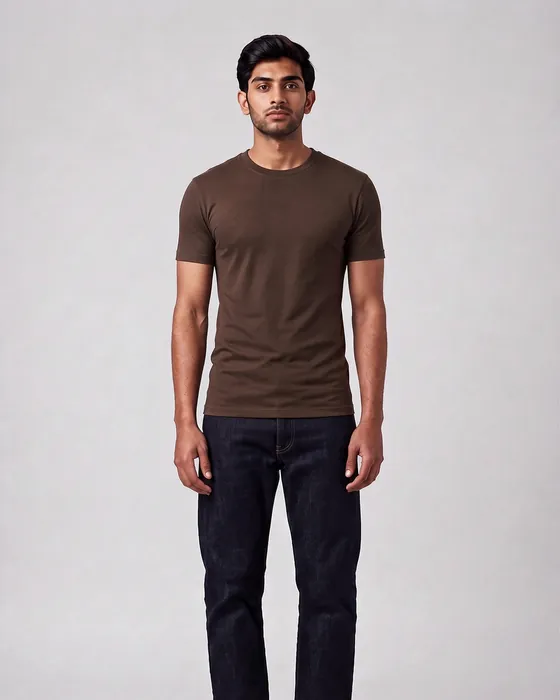
A man in a brown t-shirt and dark jeans, the t-shirt in a slim fit, close to the body
Slim fit
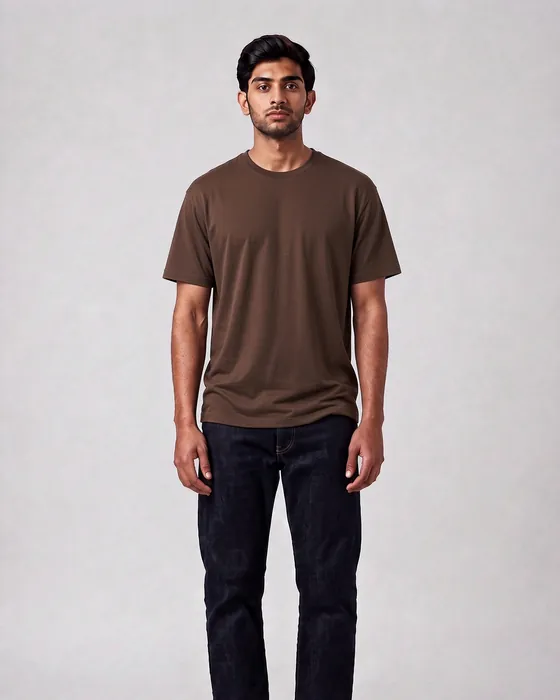
The same man in the same brown t-shirt in a loose fit, wider through the body and sleeves
Loose fit
Illustrative images, not output from our fit technology

Same person, same t-shirt, slim fit and loose fit. The lookbook already answers “it did not suit me”. This answers “it did not fit”, about one return in three, and the harder half of the problem.

Four ways to learn their size

  • My Closet

    You already know what they bought, and in what size. The customer says how each piece fits, tight to loose, and we work back to their measurements.

  • A few questions

    One top and one bottom they own, any brand, any size, and how each one fits.

  • A photo app

    Measurements taken from two photos, one from the front and one side-on.

  • Manual measurements

    For customers who already know their measurements.

Where this actually is: a tech proof of concept, not a shipped feature. Hardening it into the lookbook is what we are building next.

We are looking for investors and brand partners to bring this to market. Talk to us

Sources: Zalando corporate disclosure and Marriott et al., Transportation Research Part E 194 (2025), size and fit ≈ one third of returns.

Purpose-built for fashion retail

Every component of our stack is designed specifically for the challenges of online fashion, handling diverse body types, accurate colour representation, realistic fabric draping, and the speed that modern e-commerce demands. We don't retrofit general-purpose AI tools; we build purpose-specific pipelines that deliver consistent, high-quality results.